
On Sunday, September 21, 2025, Barichara awoke to a different atmosphere. From 8:30 a.m., community buses began arriving from the surrounding rural communities: Santa Helena, Paramito, Guane, El Pino, Butaregua, Salitre, among many others. Men in hats, women in their finest dresses, young people with cell phones, teachers and students—all with the same purpose: celebrate participation.
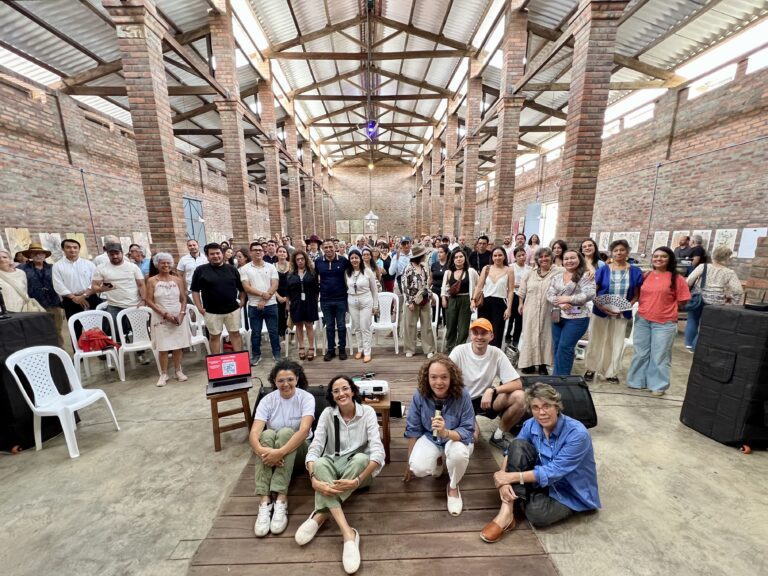
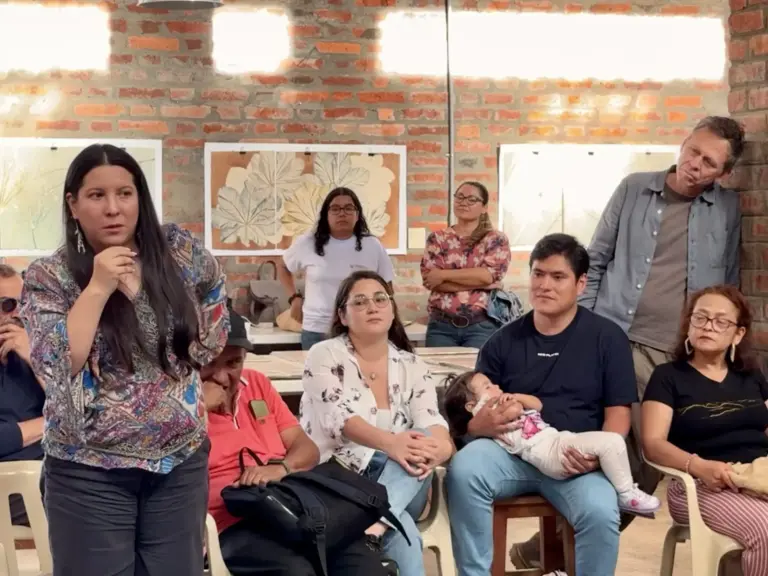
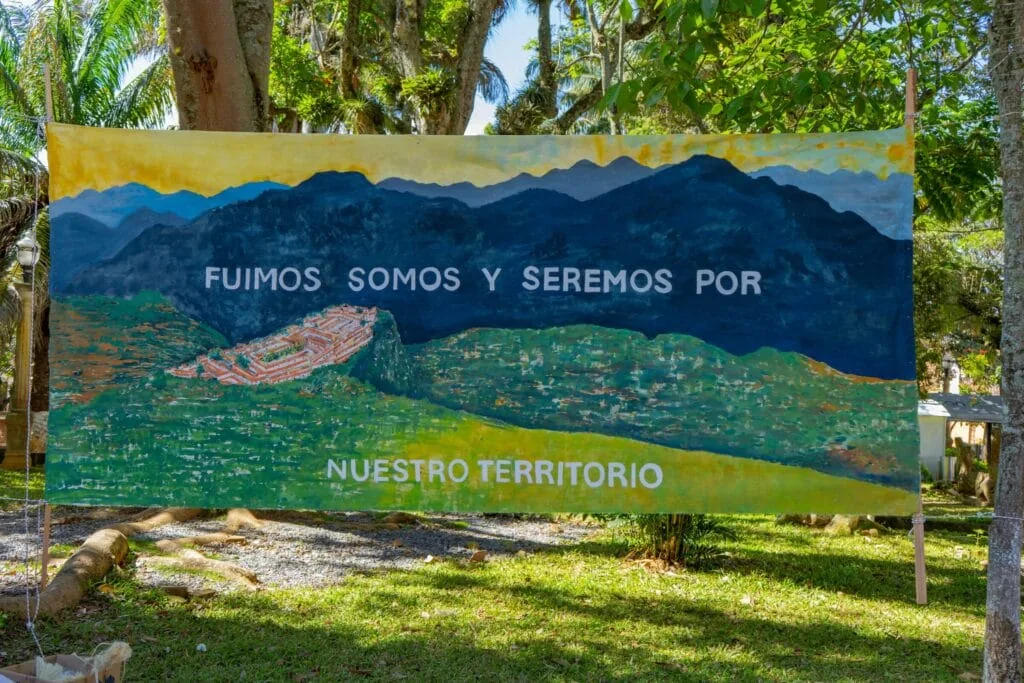
Seventh Avenue in the main park was transformed into a large meeting space. Beneath the structure meticulously assembled by a group of volunteer architects, the following were exhibited: Maps of the Territory, Large canvases, full of color and memory, reflected the most significant places and the aspirations of the inhabitants of each neighborhood and alleyway. In the center hung the Living Dreams from the children and young people of the educational institutions of Barichara, written on papers that the wind moved gently.
The six axes of the EOT They also had their own space, with tables where each group managed its own display. In the Culture and Heritage section, for example, some artisans were weaving with fique and palm fibers, and there was a space to experiment with small replicas of rammed earth and wattle and daub. A map with images of local products showcased the richness of rural life and agricultural production. Tourism, industry, and commerce were represented in a community tapestry made with colorful scraps of fabric; representatives from community water systems shared their experiences with infrastructure and public services, while stories of community roots gathered at a community gathering spoke of regional development.


The Young Reporters Community members walked among the people, recording the activities and the feelings of those present. Table of Abundance, Created with contributions from restaurants, bakeries, cafes and local producers, it offered tastings with ingredients grown and cooked in Barichara.
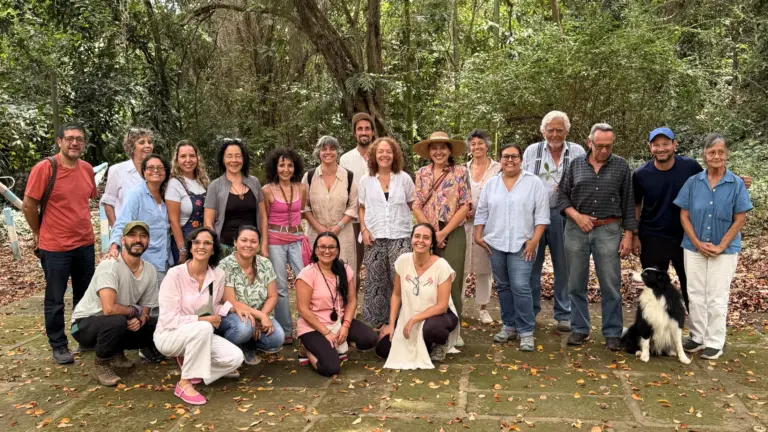
Around five hundred people They participated throughout the day. The street was filled with laughter, hugs, and conversations. Everything made sense: it wasn't just any fair or event, but a territory festival, It was an act of trust and participation. The faces of those present reflected the emotion of knowing they were part of something bigger.
On stage, the Municipal Music School's Wind Band and the DanzaAquileo dance group enlivened the morning. Sol Violeta Ortiz and Saray Jhuliana Jaimes, winners of first and third place in the Regional Oratory Contest, respectively, performed their award-winning speeches. Awards were presented to the Affective Maps and Community Reporting groups. A toast was offered with masato (a fermented corn beverage), and the event concluded with traditional folk music from the group Alma Campesina, which got everyone dancing.
During this day of participation, many understood that the Forum was not just an activity within the EOT process, but a statement of principlesBarichara wants to decide its future through cooperation, not imposition.


Paths of trust
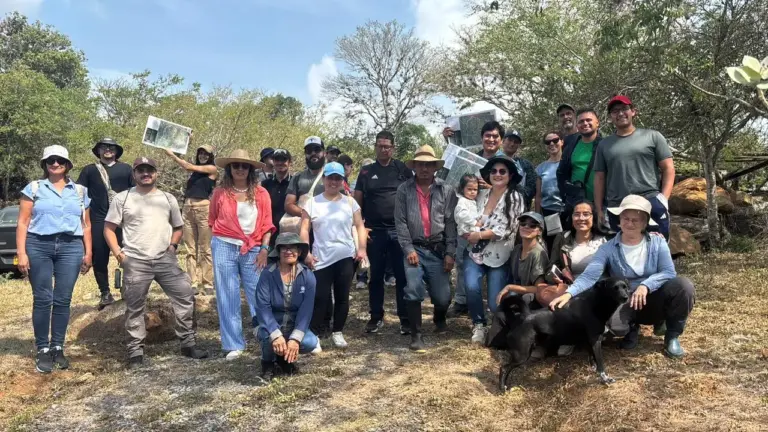
The Forum was born from the grassroots and is sustained by the strength of an organized community. The tents, materials, and sound equipment were managed collectively. The Mayor's Office supported the event with transportation from the rural areas, as well as chairs and other forum supplies. More than sixty volunteers They worked before and during the event setup, and others for 4 months in coordination with the twenty-five Community Action Boards, The schools, rural aqueducts, and local groups were used to gather information for the 25 Affective Maps, the 6 Living Dreams, and the 17 Community Gatherings. There were approximately 892 entries in the various activations prior to the Forum.
The Community Water Board (MESETA) It spurred the process, and the Barichara Regenerative Foundation From the outset, it provided support in channeling resources and technical assistance for the development of the Forum. Autonomous University of Bucaramanga (UNAB) strengthened the pedagogical approach, demonstrating that academia and the community can walk together.
The result was a exemplary exercise in territorial governance: transparent, rigorous and profoundly human.
The Institutional Academic Forum
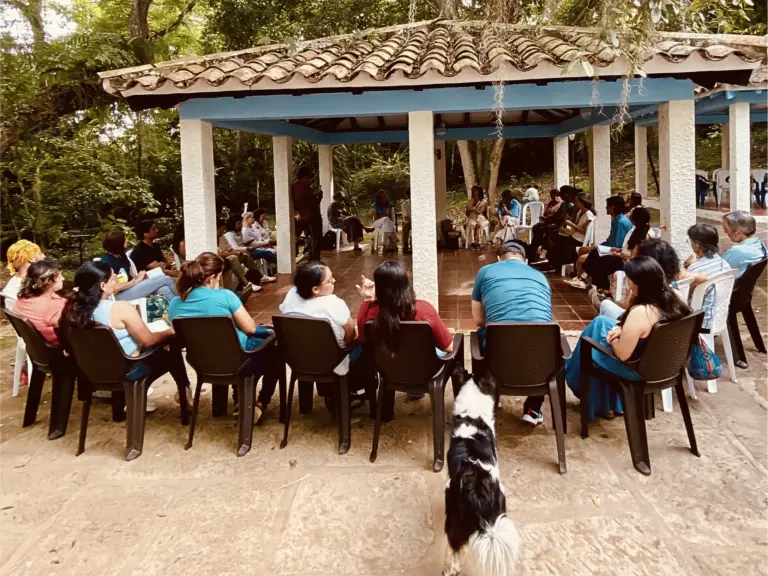
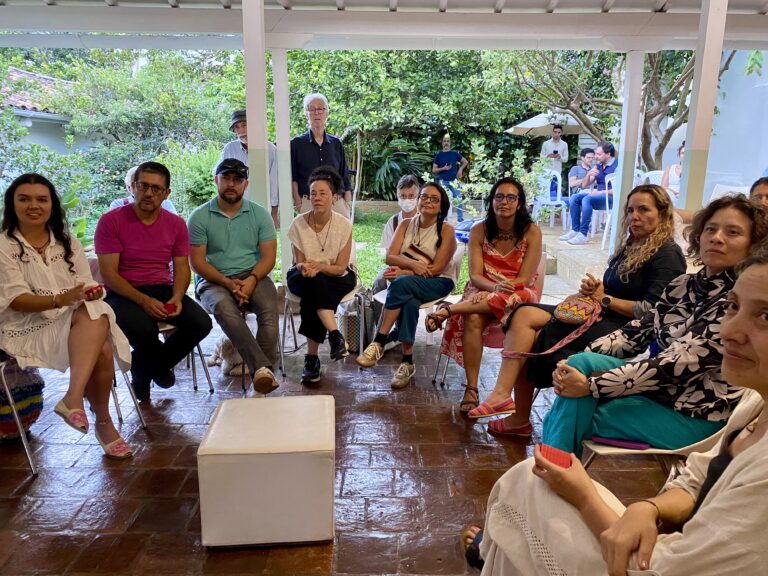
In the afternoon, the day continued at the La Nube Inn, with the EOT Barichara Institutional Academic Forum. Representatives from Ministry of Housing, City and Territory; the Departmental Planning Secretariat; the Colombian Society of Architects – Santander Regional; the Bucaramanga Chamber of Commerce; the UNAB; the UIS; representatives of PLATEAU; the Barichara Regenerative Foundation, officials of the Town hall, the Assembly, he City Council, the citizen oversight, community leaders and businesspeople. It was a space for dialogue and collective reflection about the present and future of the territory.
Institutional experts acknowledged the unprecedented character of a process where the community arrives with concrete proposals, The result of months of collective work, what was shared there was a living proposal, built with rigor and legitimacy, demonstrating that territorial planning can be born from listening, reciprocity, and love for the land.


The EOT Barichara 2025 Citizen Forum was made possible thanks to the commitment of more than thirty-two organizations, twenty-five Community Action Boards, six educational institutions, more than sixty volunteers, social and cultural groups, and hundreds of rural and urban inhabitants.
At the Barichara Regenerative Foundation, we celebrate this milestone as a seed of hope. What began as a call to action has become a vibrant network of cooperation, trust, and shared purpose. We believe that when a community comes together to reflect on its territory, it doesn't just create maps: it charts paths toward a regenerative future, where every voice matters and every action sows life.