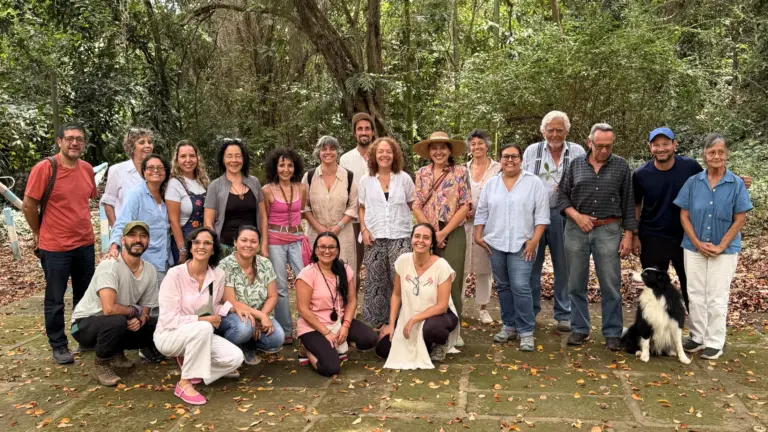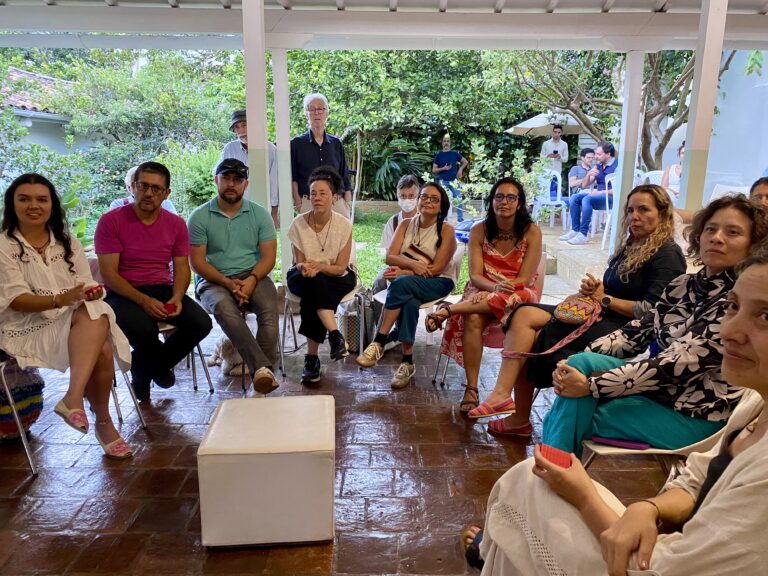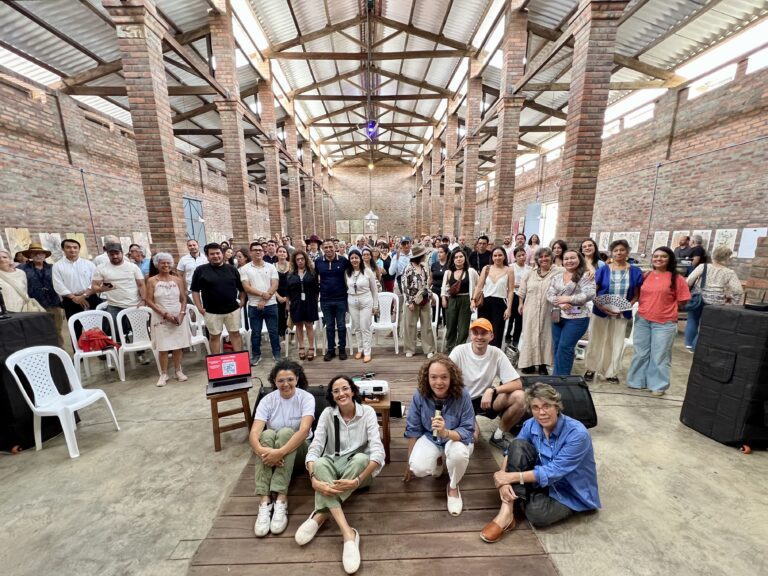

Last weekend we experienced a meeting that reminded us of the importance of dialogue between communities. The Barichara Regenerativa Foundation opened its doors to welcome two sister projects taking their first steps as community-based foundations: Kairigua, in Mogotes (Santander), and Rizoma, in San Rafael (Antioquia), as well as TerritoriA ya Refi Collective.
More than a visit, it was an exchange of learning, questions, and fresh perspectives. We shared our experience as a foundation with several years of experience and listened attentively to the reflections of those who are building their own community-based initiatives. The intention was clear: to learn from each other and, together, strengthen the purpose of what it means to be a community-based foundation.
First stop: the earth as teacher
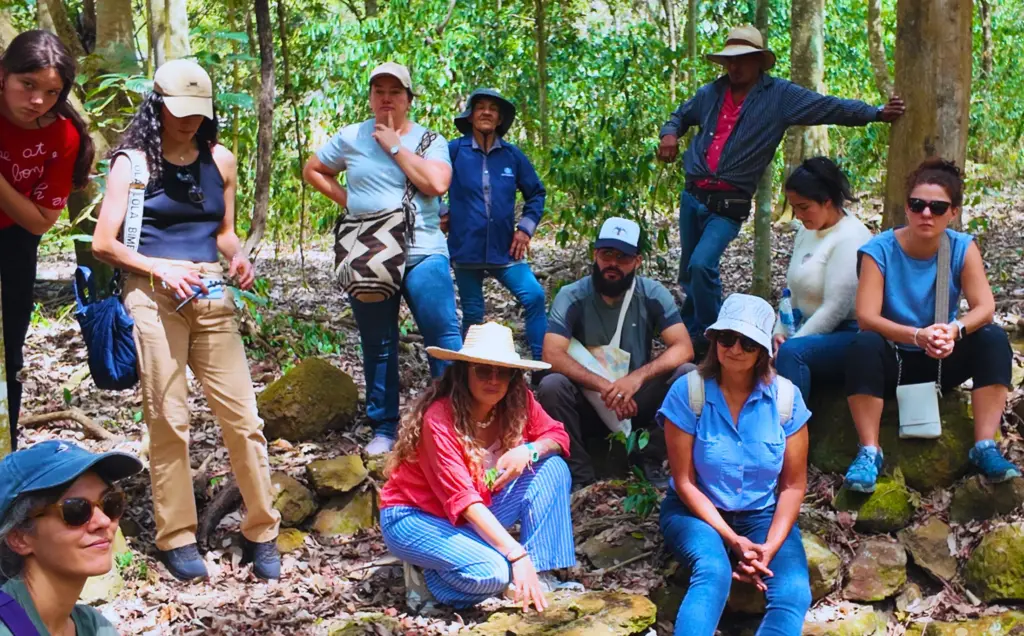
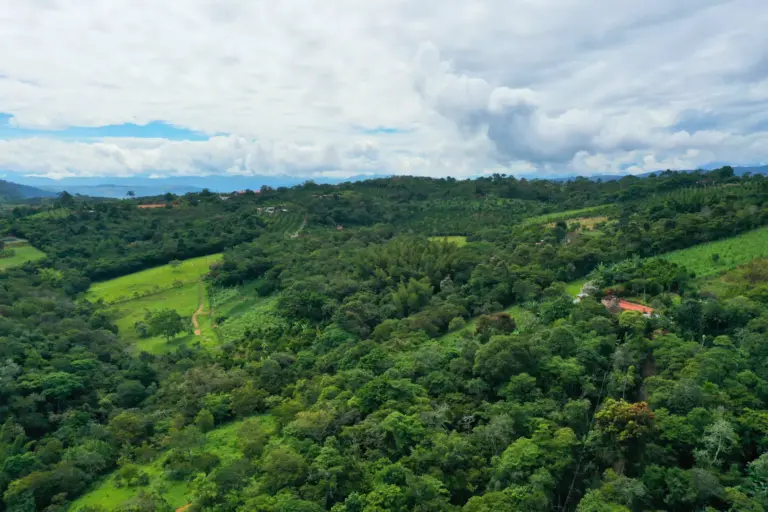
Saturday, February 14th began with a visit to the El Totumo Reserve, a space that has been exploring Syntropic Agriculture as a tool to restore ecosystems and strengthen agroforestry systems oriented towards food sovereignty.
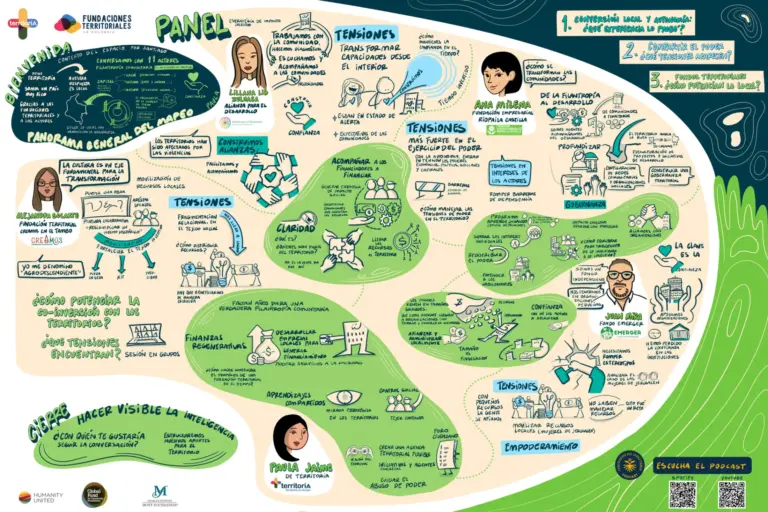
Walking together through the reserve and listening to the story of the process allowed us to open a deep conversation about regeneration and ask ourselves what, in essence, a territorial foundation is.
An important distinction emerged in the dialogue. A territorial foundation that adopts a regenerative approach is not the same as a foundation in which regeneration is the central theme.
From the perspective shared in this meeting, A territorial foundation owes its existence, first and foremost, to the needs of its territory. Its purpose, priorities, and governance system must respond to the community's requirements. It may—if it so chooses—adopt a regenerative approach, but its raison d'être is the territory itself.
In contrast, a thematic foundation focused exclusively on regeneration defines its decisions based on that specific principle, which doesn't necessarily align with all territorial priorities. This conversation allowed us to review our own experience and reaffirm that, in Barichara, we have chosen to be a territorial foundation that adopts the regenerative approach as its guiding principle, without losing sight of the specific needs of our community.
Governance in action: the Ciclo Vivo experience


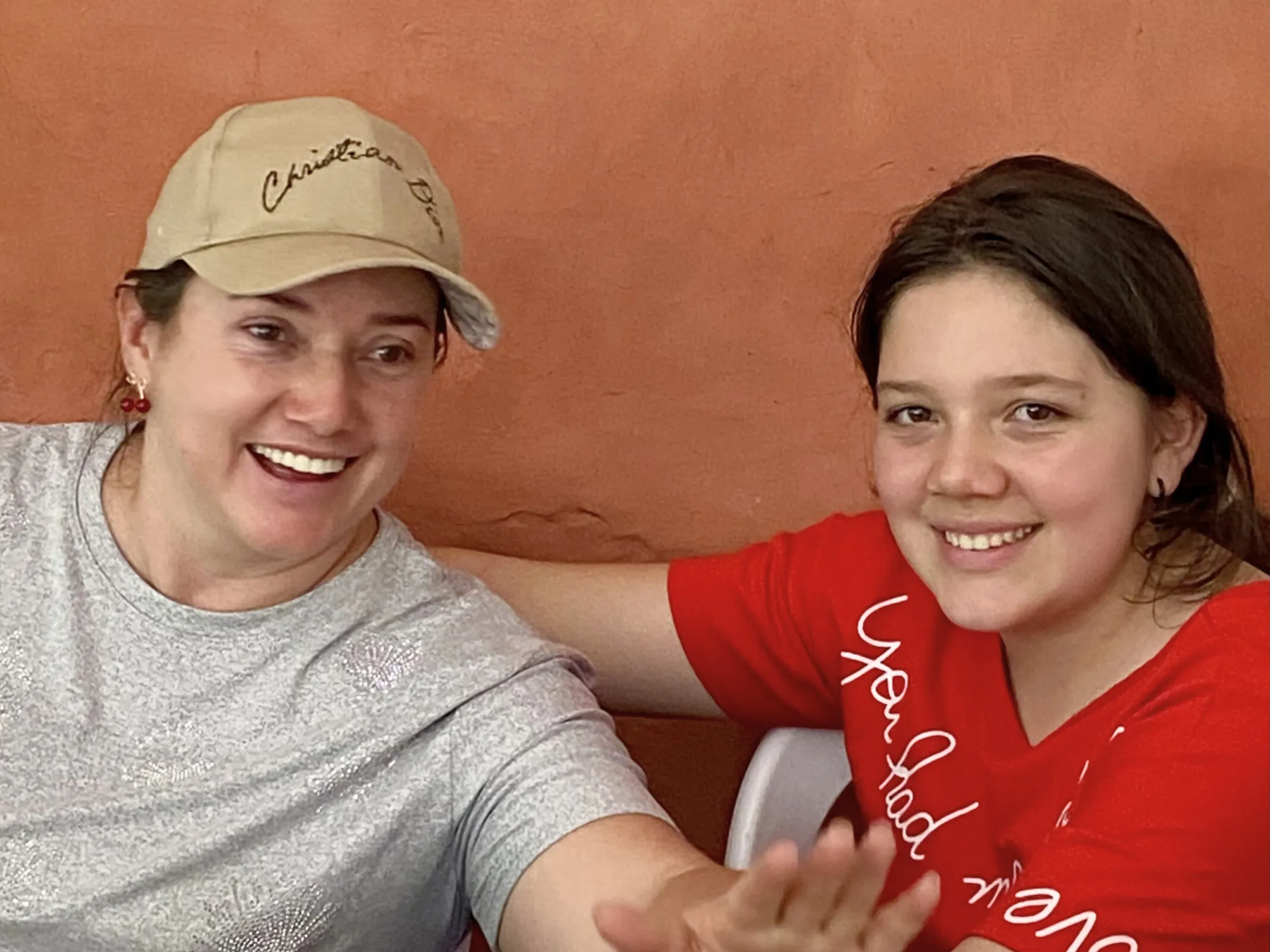
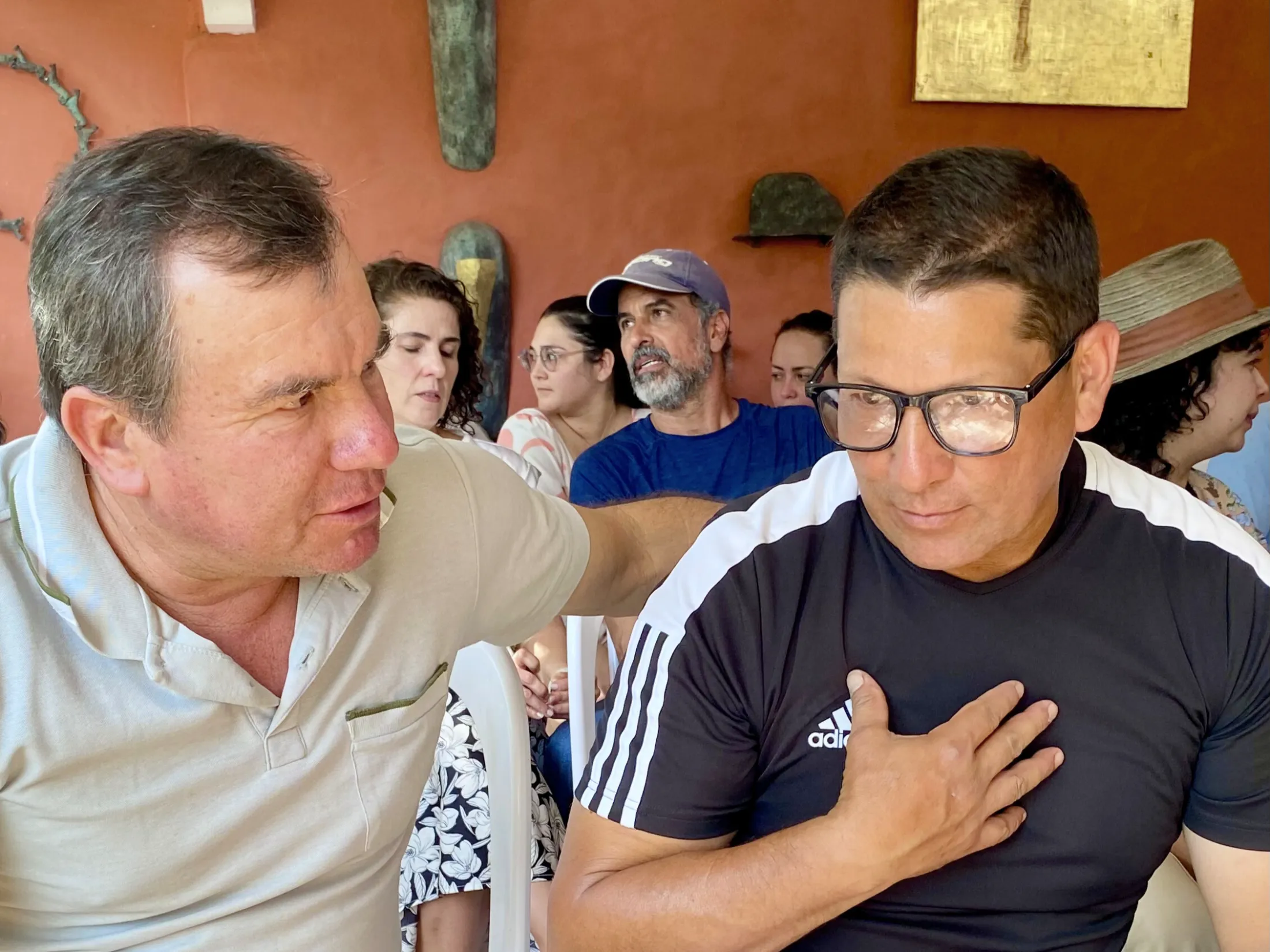
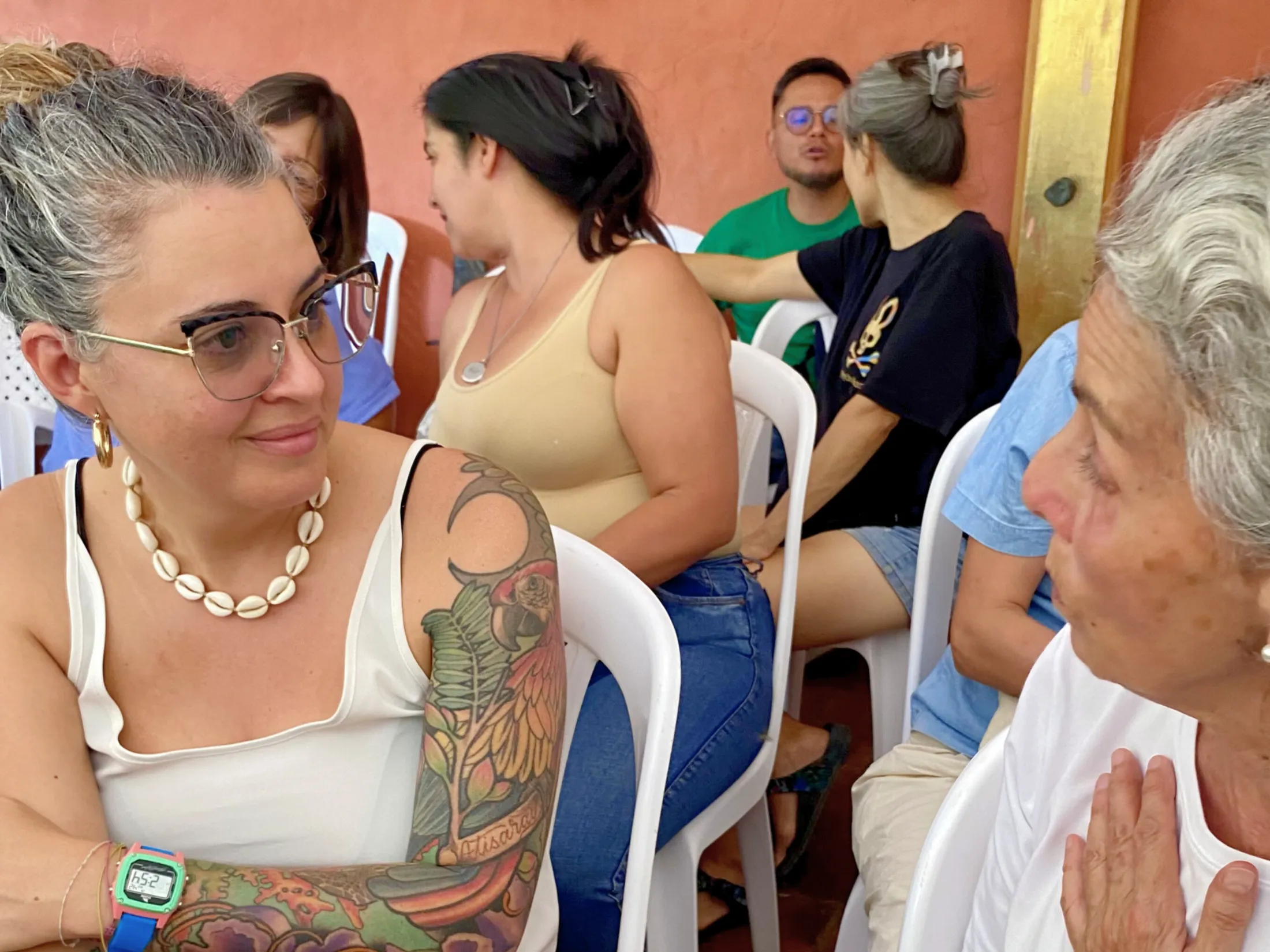
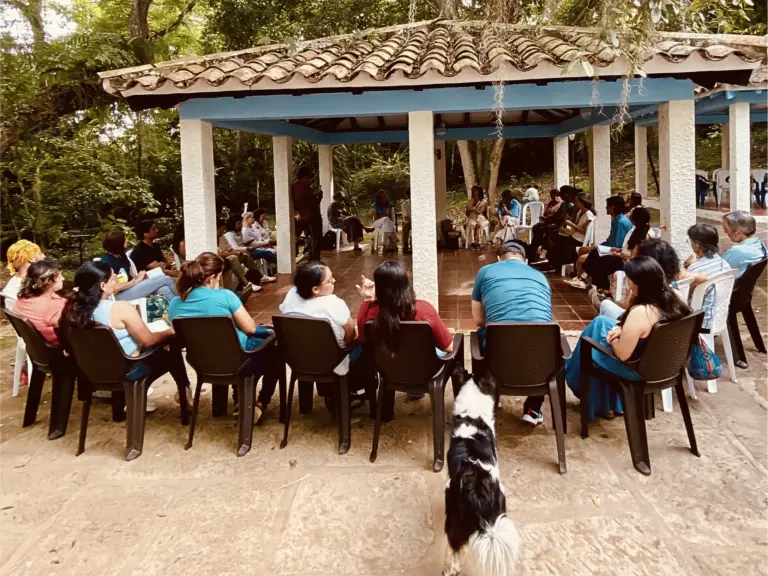
On Saturday afternoon, our guests participated in a Ciclo Vivo meeting, a space where different initiatives from the territory come together to discuss and make collective decisions.
There, they learned about the governance model we are testing: an exercise where emerging initiatives not only present their processes but also participate in the distribution of available resources. It is a commitment to co-responsibility and transparency, where those who live in the territory directly influence the decisions that affect it.
For Kairigua and Rizoma, it was an opportunity to observe how we are trying to ensure that governance is not just a fancy word in a document, but a living practice, with constant tensions, learning, and adjustments.
Information to help you decide: maps that tell stories
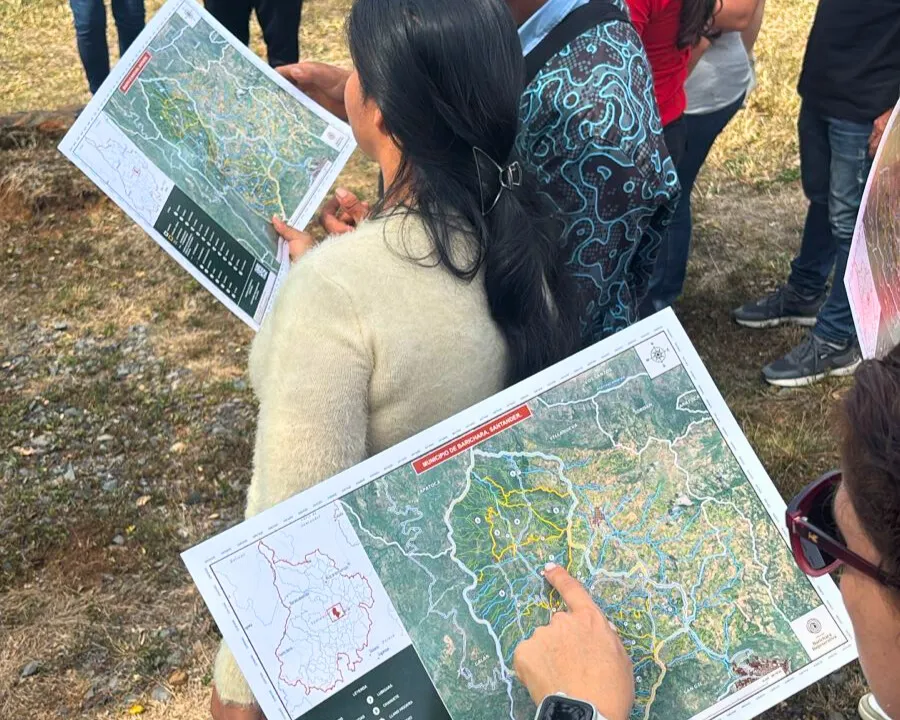
On Sunday, February 15, in the early hours of the morning, we shared another of our learnings: the use of Geographic Information Systems (GIS) as a tool to strengthen community processes.
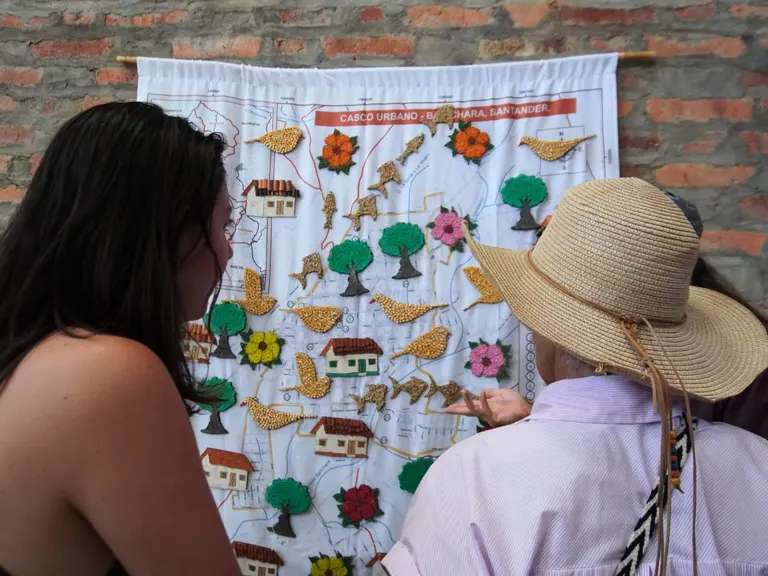
We explained how we are consolidating a geodatabase with the general cartography of the territory, which is then made available to local stakeholders through geoviewers and other digital tools. The intention is clear: that the information serves to inform decision-making.
Among the examples shared was the work of the Barichara Water and Environment Oversight Committee, which has used this information to support its positions on environmental issues. We also showcased the development of a geoviewer so that the children in the Seed Hunters research group can systematize their findings more efficiently and effectively.
Maps, we understood together, are not just lines and colors. They are stories of the territory and tools that make it easier for us to take better care of it.
Citizen participation, economy and regenerative education


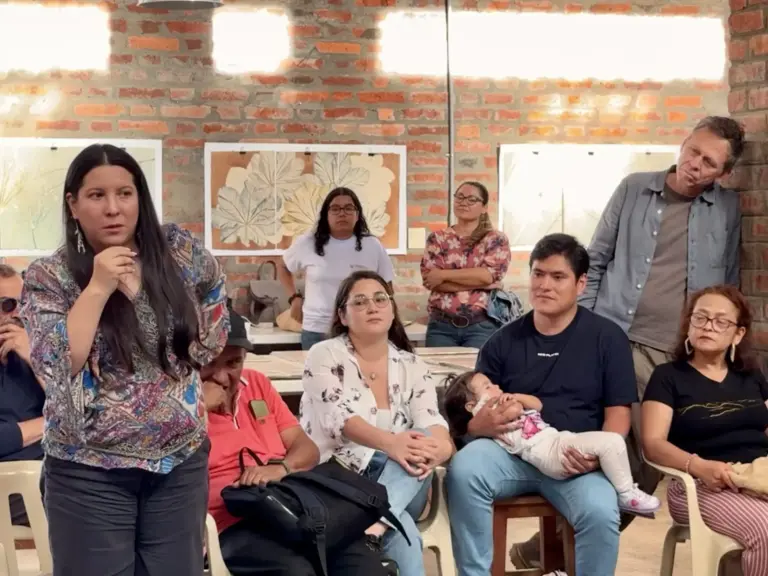
Our guests also participated in the presentation of the results of the Barichara EOT Citizen Forum, a process that fostered a collective vision for the territory in preparation for updating the Territorial Planning Scheme. It was an opportunity to see how citizen participation can translate into concrete proposals and an agenda that addresses local needs.
In the afternoon, the exchange continued with Casa Común, where a regenerative economics exercise was shared, and with Suna, a platform that strengthens educational tourism and regenerative education processes in the region. These sessions broadened our perspective on how education, economics, and regeneration are interconnected in our local experience.
An open invitation to collaboration
The meeting ended with a space for frank dialogue about possible collaborations between the territories and a general feedback session on the experience.
We left with new questions, enriching external perspectives, and the certainty that no territory walks alone. Kairigua and Rizoma returned to their places with shared learnings; we were left with the gift of their perspectives and the challenge of continuing to refine our purpose.
Because if this weekend reminded us of anything, it's that territorial foundations aren't rigid structures: they're living processes. And when three territories sit down to talk honestly, what emerges isn't just technical exchange, but trust.
And trust—as we well know—is also a form of regeneration.